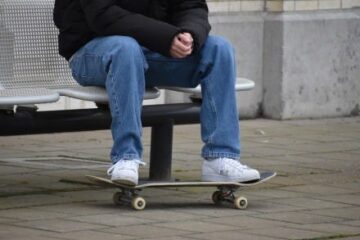
If you have been skating for any amount of time, you’ve encountered an injury. When you’re hurling yourself down massive stair sets, grinding handrails, and taking slams on concrete day after day, injuries aren’t a matter of but when. It doesn’t matter if you’re skating casually or training seriously, your body will take a beating. That’s why understanding how to take care of yourself can be just as important as learning tricks. If you’re like me, you want to be able to skate as long as possible. Looking at how professionals prevent and manage injuries is a great place to start.
Warming Up
The foundation starts with warming up properly. One of my favorite skaters, Chris Joslin, has been open about his recovery routines after dealing with knee surgery and various injuries throughout his career. He focuses on things that help him loosen up before sessions and recover afterward so he doesn’t wake up completely wrecked the next day. Most pros don’t just show up to a spot and immediately start trying their heaviest tricks. They’ll push around, do some flat ground tricks, and gradually work up to riskier tricks. Dynamic stretching before skating has become more common, too. These are movements that take your body through a full range of motion rather than static holds. Terry Kennedy has talked about how working with strength and conditioning specialist Danny Duncan helped increase his ankle range of motion. This is crucial for preventing rolled ankles and other common skate injuries.
Preventative Measures
Opening any pros Instagram nowadays, it’s common to see videos and pictures in the gym. A huge reason for this is muscle in your legs and core helps absorb impact and stabilize joints during landings. Nyjah Huston started weight training back in 2018 and noticed immediate benefits. He found that being stronger helped him rotate his body more effectively on tricks. It also gave him higher pop. Squats, lunges, and calf raises are common exercises that strengthen the legs and ankles. These are the areas that take the most punishment. Core work-outs like planks and rotational exercises improve stability and balance. The goal is to build a resilient body that can handle the constant stress of skating.
Plyometric training like box jumps can also prepare your body for the explosive movements and repetitive impacts of skateboarding. Box jumps are a perfect example. They train your muscles to generate explosive power quickly, which is exactly what you need when popping your board. Depth jumps, where you step off a box and quickly jump again, will prepare your body for the shock of landing down gaps. Broad jumps improve your ability to generate forward momentum. These exercises train your nervous system to react faster and handle repetitive impacts better. The repetitive nature of skateboarding, especially if you skate frequently, means your body will endure forces that many people won’t. Plyometrics prepare your muscles and tendons to handle that volume without breaking down.
Protective gear is somewhat controversial in street skating culture. It’s standard in transition, though. Many street skaters will wear ankle braces for extra support, especially after previous injuries. Impact shorts with padding can protect hips and the tailbone. Wrist guards can prevent fractures. The key is finding a balance between protection and maintaining the feel and freedom that makes skating enjoyable.
Recovery
When injuries do happen, the approach to recovery can make or break your future enjoyment of skateboarding. Going back to Nyjah, he had a major ACL tear in 2022 was the worst injury of his career. This injury typically requires nine to twelve months of recovery. He came back in under eight months. He did this by taking care of his body, eating healthy, being on physical therapy right away, and working hard at it every day of the week. Not only that, but he had been taking care of his body and working out before a lot of other people. He started when he was eighteen or nineteen years old and has only gotten more serious as he’s aged. If Huston had not gone through these precautionary steps, who knows what boundaries would have never been pushed. It’s important to acknowledge that not everyone has access to professionals to guide them through the process. However, being mindful of your injury and taking the necessary time off will yield results.
Ultimately, the pros with the longest and most enjoyable careers are the ones who learn to listen to their bodies. More time on the board equals more clips. Knowing when to push through discomfort and when to back off is a skill that develops over time. The smartest approach is understanding that skateboarding is a marathon, not a sprint. Staying healthy and taking care of your body should be paramount.